Tutors
“Fabulous tutors! I welcomed the opportunity to try a range of sessions and the flexible approach.”
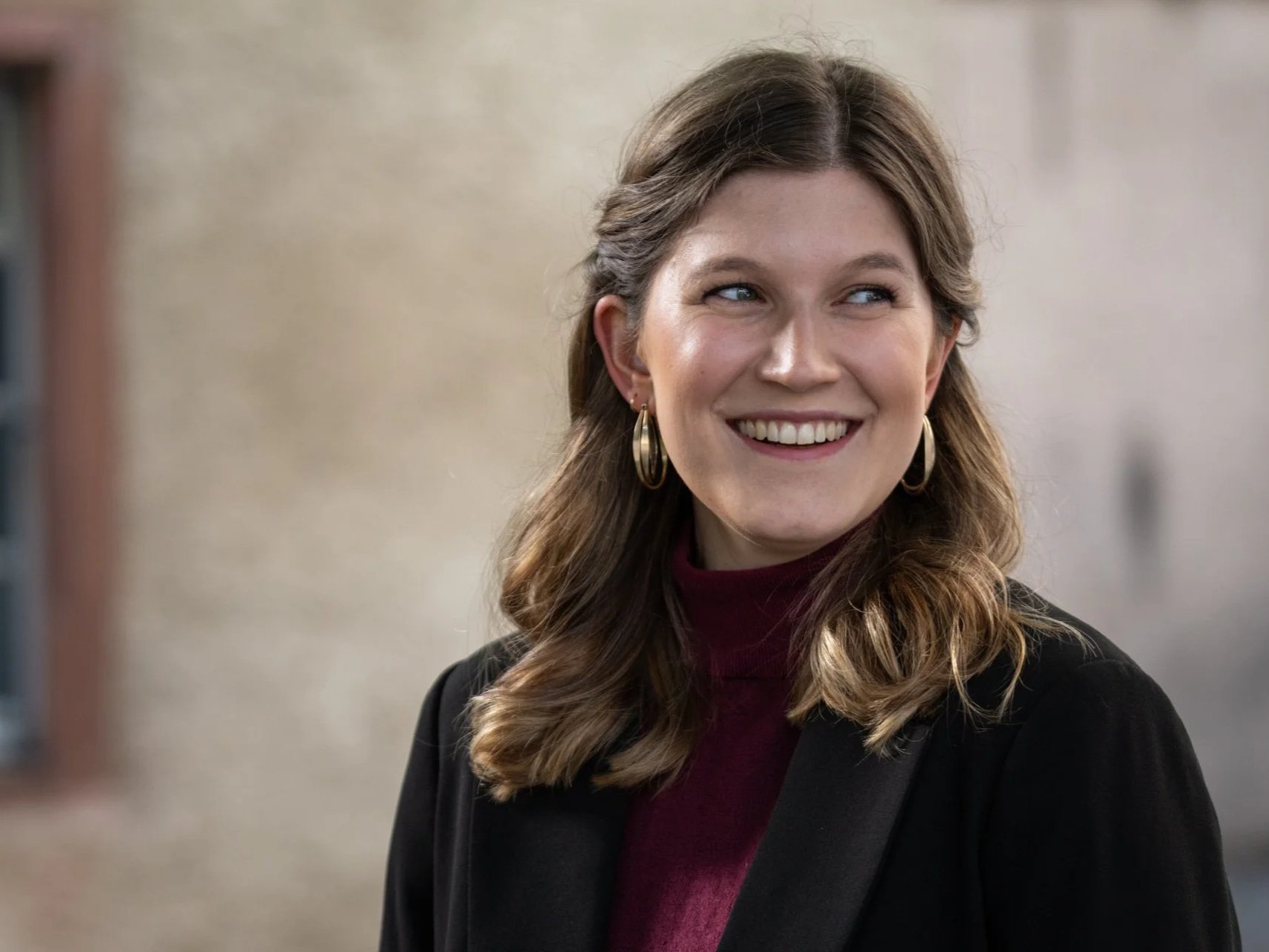
Emily Saville – sackbut
Guest tutor for 2026
An alumna of the Royal Academy of Music (UK) and the Schola Cantorum Basiliensis (CH), Emily loves sharing rich and colourful early music with contemporary audiences. In demand as an active soloist, chamber, and orchestral musician, Emily performs with world-renowned ensembles, including The Orchestra of the Age of Enlightenment (UK), Les Cornets Noirs (CH), Weser Renaissance Bremen (DE), Solomon’s Knot (UK), Abendmusiken Basel (CH), Ensemble Phoenix Munich (DE), I Fagiolini (UK), Die Freitagsakademie (CH), and The Monteverdi String Band (UK). She has received international recognition for her expression of vocal subtleties as a soloist, and was awarded first prize in the British Trombone Society’s Sackbut Competition (UK, 2022) and Early Music Vancouver’s Emerging Artist Competition (CA, 2023).
Ever enthusiastic about the art of creative teaching, Emily is a sought-after educator. She was appointed teacher for Baroque Trombone at the Schola Cantorum Basiliensis Musikschule in June 2025, and enjoys teaching on numerous courses and workshops across Europe. Her Master’s thesis on how a historical approach can foster more imaginative instrumental lessons was recognised in 2024 by the Walter and Corina Christen-Marchal-Stiftung award (CH), and in 2025 she was invited to present her research at the Medieval and Renaissance Music Conference at the University of Durham.
Eric Thomas – lute and theorbo
Guest tutor for 2026
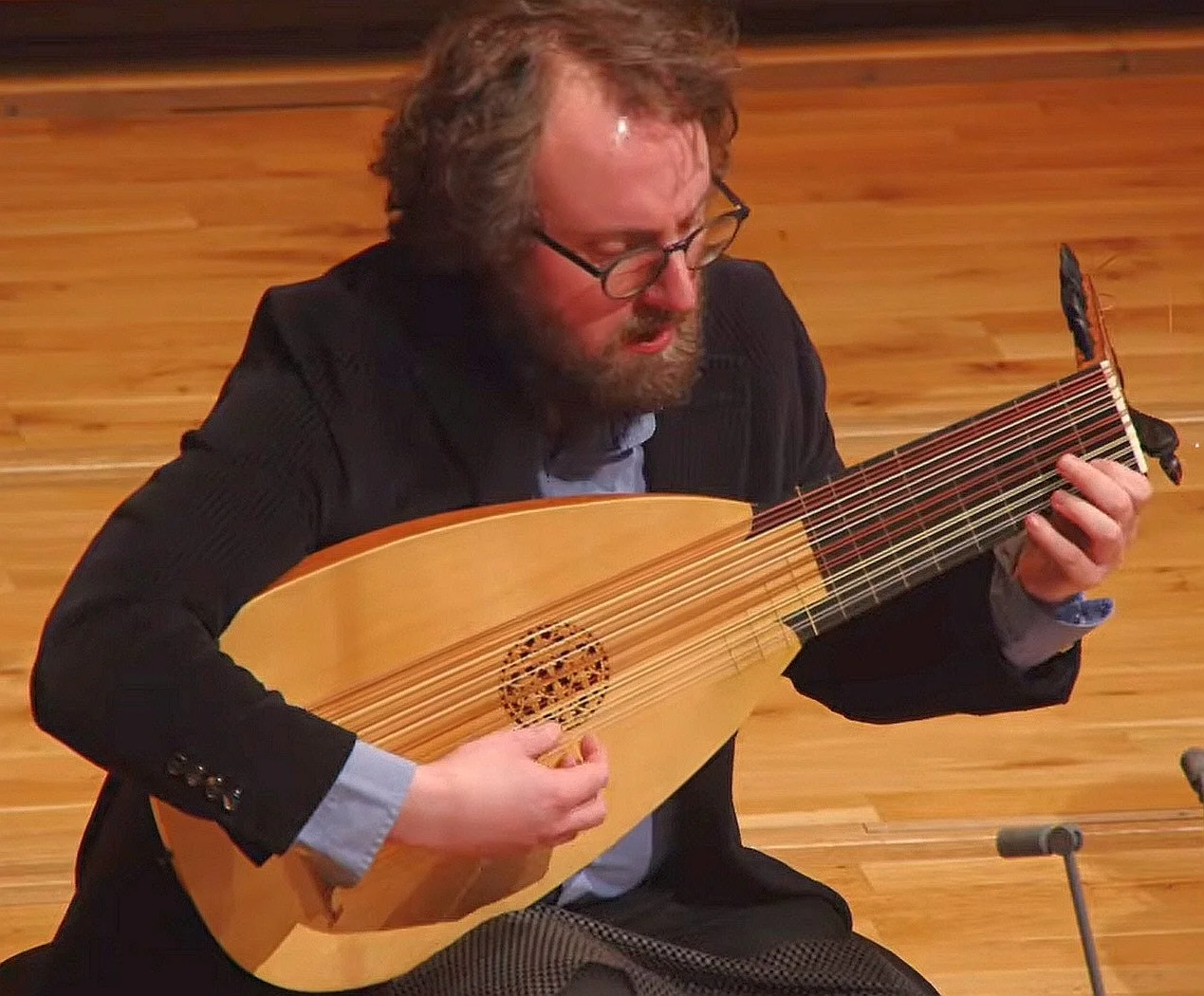
Eric Thomas is an Edinburgh-based lutenist and musicologist. He has recently earned his doctorate on the interaction between lute tablatures and their surrounding written and oral cultures in early sixteenth-century Italy, and is currently a research fellow at the centre of historical reconstruction at the University of Edinburgh.
He has performed with leading ensembles including the Dunedin Consort, Concerto Caledonia, and the RSNO and is the founder of the Spinacino Consort, an early music ensemble dedicated to reimagining the music of the sixteenth and seventeenth centuries in passionate and engaging performances. A Continuo Foundation emerging artist ensemble, they have toured Scotland, performed through the UK including at the York Early Music Centre, and the Wigmore Hall, and have recently recorded their debut album in collaboration with chamber choir Siglo de Oro, due to be released at the end of the year.

Hazel Askew – folk voice
Hazel is a singer, multi-instrumentalist, and composer from London, playing melodeons, concertina, and harp. She loves bringing songs from old manuscripts and recordings to life, and her engaging delivery of traditional songs along with her “shimmering vocals” (The Sunday Times), won her Best Female Singer at the Spiral Earth Awards.
She is a respected performer on the folk scene, most notably with BBC Radio 2 Folk Award-nominated trio Lady Maisery and traditional duo The Askew Sisters. She is also a member of the winter collaboration Awake Arise and feminist collective Coven and won Best Album at the 2017 BBC Radio 2 Folk Awards as part of 10-piece supergroup Songs of Separation.
With her sister Emily, she has produced The Askew Sisters Tunebook (32 favourite tunes) – which you may well see at HISS!
Rebecca Austen-Brown – recorders, early fiddle
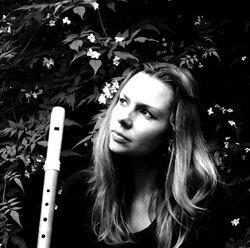
Since studying at the Royal Academy of Music and the Guildhall School of Music and Drama, Rebecca has been recognised for her work as a performer on recorders and early string instruments.
She has recorded and toured with many ensembles; most recently the Sixteen, Glyndebourne Touring Opera, the Dufay Collective, The City Musick, I Fagiolini, the CBSO, and La Nuova Musica, and is a founder member of the Fontanella Recorder Quintet with whom she has recorded for BBC TV, and Radios 3 and 4. She has toured with Shakespeare’s Globe Theatre and the Young Vic. She is a regular film session musician and can be heard on soundtracks including The Hobbit, Les Miserables, Grand Hotel Budapest and Mary Queen of Scots.
Having developed an obsession with electronics in recent years, she is devising programmes exploring the sounds of historical instruments with loop pedals and effects.
She teaches at the Royal College of Music Junior Department, and has given classes in Oxford University, Guildhall School of Music and Drama, and Birmingham University and Conservatoire. She tutors at Benslow Music and is in demand both as an external examiner in UK Conservatoires and as a regular guest adjudicator in the UK.

Tim Bayley – reeds (also flutes, bagpipes, hurdy gurdy, harp and portative organ)
Tim Bayley has been involved with the early music world since the late 1970s, when he helped to establish one of the first revivals of a sixteenth-century waits band, the York Waits. He started as brass player but gradually moved into Renaissance wind instruments, covering all the reeds, recorders, flutes and bagpipes, then adding hurdy gurdy, harp and portative organ.
He still performs with the York Waits, devising themed programmes of material from 1400 to 1600, touring at home and abroad and producing a variety of CDs and other recordings. He regularly leads one-day workshops for anything between four and fifty players, and coaches at the annual Chalemie Summer School. He also works in full-time music education, teaching clarinet, saxophone and piano, and conducting a wide range of ensembles, bands, and orchestras.

Anne Marie Christensen – baroque violin
Anne Marie is a violinist, violin teacher and scholar with a particular passion for the string repertoire of the long eighteenth century and an interest in the connections in the history of the arts (particularly the interactions between culture and society, which she explored in her PhD).
She enjoys exploring the depths of the cantatas of JS Bach, the galant style represented by Haydn, Boccherini, and others, and the fireworks of the Italian masters of the violin, as well as folk-inspired repertoire; and presenting these repertoires, both well known and forgotten, to audiences in concert or more informal settings.
Originally a graduate from the Royal Danish Academy of Music, she initially dreamt of a career as a violinist in a major orchestra in her native Denmark. However, the chance to study abroad with Professor Milan Vitek at Oberlin Conservatory opened her eyes to early music and historical performance and she soon changed course to specialise in baroque violin performance, earning a master’s degree.

John Dipper – fiddle
A respected and established performer, composer, teacher, and instrument maker, John grew up steeped in the traditions of southern England. His unique playing style and compositions convey a deep understanding and passion for indigenous culture.
His album Unearthing, by Patterson Dipper was in both Mojo and The Guardian’s Top 10 Folk Albums of the Year in 2021. Tricks of the Trade by Dipper Malkin and Alchemy by the Emily Askew Band were both The Times Top 10 Folk/Roots albums of the year when they were released
As an experienced workshop leader and teacher, his knowledge, experience, and enthusiasm combine to make him a much sought-after tutor in academic institutions, festivals, music camps, and academies. He has taught at venues and events including the Australian National Festival, Sidmouth Festival, Ashokan, and Goldsmiths University, and regularly teaches on the Folk Music degree course at Newcastle University, the World Irish Music MA Course at Limerick University, and Southampton University.
His passion for vernacular music led to his degree dissertation focusing on the interpretation of field recordings, looking at intonation, tuning, and expression. With his knowledge of the construction and physics behind the workings of the violin and concertina, and his musical knowledge and approach, he is able to offer a unique insight into the world of music and music making.
He has recorded for several films including The Hobbit, as well as the TV series Poldark. He currently performs with the groundbreaking duo Dipper Malkin, in the trio Alma with Adrian Lever and Emily Askew, in a duo with superb singer and guitarist James Patterson, in the highly acclaimed Emily Askew Band, and with Vicki Swan and Jonny Dyer in Purcell’s Polyphonic Party. He is also working with the renowned storytellers Hugh Lupton and Nick Hennessey.

Alison Kinder – viols
Alison is a founder member of Chelys consort of viols where she enjoys researching, performing, and recording programmes covering all aspects of consort music. She also has a particular interest in ‘Renaissance’ viols (early viols made with no soundpost) with the Linarol Consort, who play on copies of the earliest surviving viol made by Francesco Linarol.
She has a great love of working with singers, and the affinity between the sound of the viol and the voice. One of her favourite places to be is as the gamba player with Musica Secreta, an all-female polyphonic ensemble specialising in the research and performance of music by and for early modern women.
Venturing into the eighteenth century with a beautiful seven-string viol named Flo, she plays with lutenist Lynda Sayce in Apollo’s Revels, and in the Christian Baroque ensemble Dei Gratia where she also plays baroque violin. She also loves making music accessible to as many people as possible – the best audience reactions are from people hearing something for the first time with no idea that they were going to enjoy it so much! That is a focus of the new group Sounds Historical, who aim to play in local churches to local audiences with fun and accessible programmes.
She read music at Oxford University before being given a scholarship by Trinity College of Music where she studied viol with Alison Crum and was awarded the college’s Silver Medal for Early Music Studies.
A keen teacher of both children and adults, she is a tutor on a number of early music courses, regularly leads workshops for the early music forums, and is co-director of Rondo Viol Academy, which runs weekend courses for players of all standards.

Catherine Strachan – baroque cello
Catherine Strachan grew up in Aberdeen, where she benefited from a superb start to her musical education thanks to the local authority music service and local youth orchestras.
She studied modern and baroque cello performance with Myra Chahin and Alison McGillivray at the Royal Conservatoire of Scotland (formerly RSAMD), and followed this with an MA in baroque performance practice at the University of York.
She is now based in York, where she enjoys a varied career as a freelance cellist and string teacher. She also plays with various local ensembles including Otley Baroque, Leeds Baroque, and York Guildhall Orchestra.
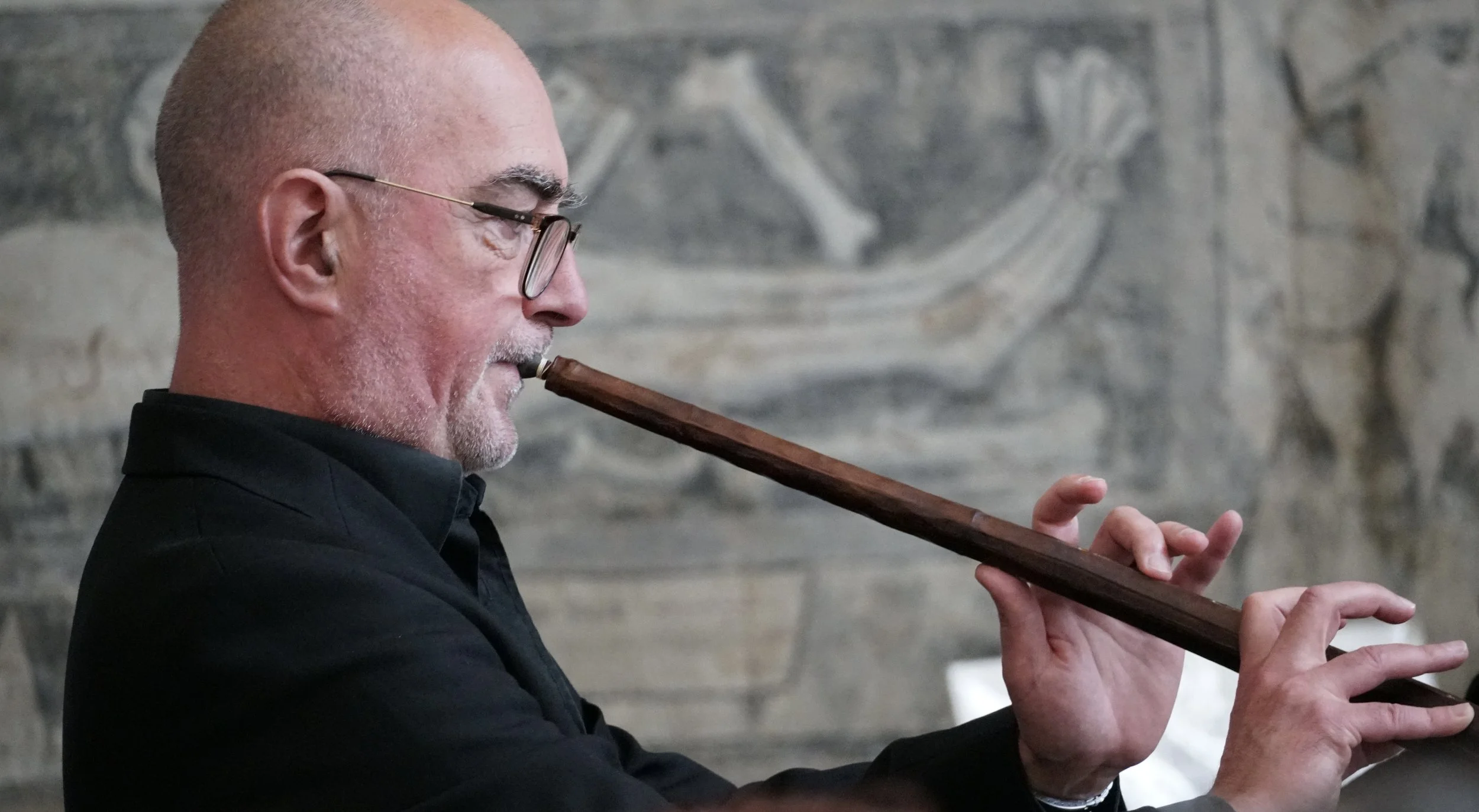
Richard Thomas – cornett
Richard studied at the University of Wales, the Royal Academy of Music, and the Schola Cantorum, Switzerland.
He has been a regular performer at Shakespeare’s Globe Theatre, London well as performing as part of ensembles directed by Sir John Eliot Gardiner, Sir Roger Norrington, Trevor Pinnock, Harry Christophers, and Paul McCreesh, touring throughout Europe as well as to North and South America, Asia, and Australia.
His interest in period instrument performance began at university and eventually led to the formation of the acclaimed sackbut and cornett ensemble QuintEssential in 1993. He is also a founder member of The City Musick and a nineteenth-century saxhorn quintet, The Prince Regent’s Band.
He teaches natural trumpet and cornetto at the Royal College of Music, the University of Birmingham, and the Royal Birmingham Conservatoire, as well as regularly coaching on study weekends and summer schools.
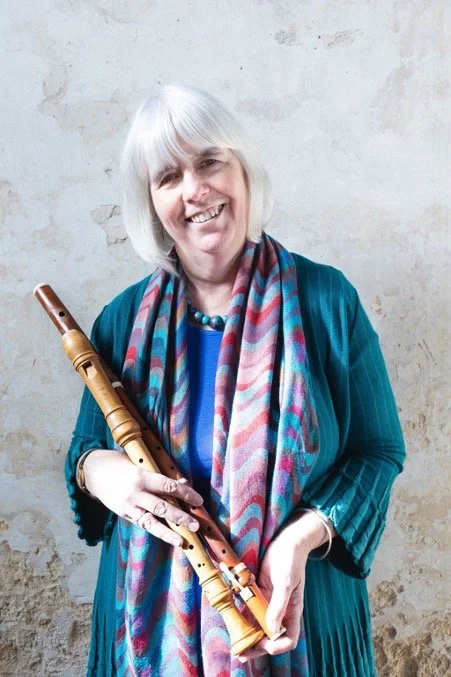
Mary Tyers – recorders and flutes, modern and historical
Mary Tyers is an experienced and enthusiastic teacher, conductor, and performer. She delights in helping the amateur musician develop their technical and interpretive skills through exploring music they both love to play.
She has over thirty years’ experience as an instrumental teacher, maintaining an extensive private teaching practice across the north of England and via Zoom. She also tutors on recorder ensemble weekends at Rydal and Parcevall Halls and on longer residential music courses, including Norvis and the Easter Recorder Course as well as HISS. She is also in demand as a popular visiting conductor to Society of Recorder Players branches and festivals and has led several workshops for early music forums.
As a member of the multi-grant winning, multi-instrumental early music ensemble Sounds Historical, she has performed around the UK. She also performs regularly with more northerly period instrument orchestras and has returned to her folk roots through a lively collaboration with former HISS tutor Stewart Hardy (fiddle) – look out for Hardy Tyers.
Graham Coatman – choral training, keyboards, continuo

Director of HISS
Graham Coatman is a composer, conductor, choral trainer, and keyboard player. He has worked as a vocal coach, education animateur ,and continuo player with the English Concert, Charivari Agréable, BBC Philharmonic, English Northern Philharmonic, and the Orchestra of St John's Smith Square, and on creative music theatre projects with the major opera companies, including Opera North, the Royal Opera House, English National Opera’s Baylis Programme, Welsh National Opera, Glyndebourne, English Touring Opera, at many notable venues, including the South Bank Centre, Wigmore Hall, and Chichester Festival Theatre. He has led large-scale sub-regional and national projects for Youth Music, Creative Partnerships, and several festivals and LEAs.
He was a senior lecturer in Performance Studies & Composition at Leeds College of Music before taking up a part-time lectureship at Bath Spa University. His PhD research on medievalism in contemporary music at Huddersfield University led to papers delivered to the inaugural Middle Ages in the Modern World (MAMO) Conference 2013 at St Andrews, and a "special lecture" at the International Medieval Congress, Leeds in 2015, published in the proceedings of the British Academy (OUP 2017). As director of 20,000 Voices, promoting the benefits of singing to all, he was UK leader of the EU Erasmus+ choral conductor training programme ADDUP, working with colleagues and choirs in France, Italy, and Poland.
He now directs a number of choirs and choral projects in the south west, and continues to work as pianist, organist, accompanist, and continuo player, as well as composer and arranger.
“Great tutors, fun sessions and a chance to meet a lot of amazing and friendly people – what more could you want?”